Garage Door Accessories Parker: Practical Upgrades You’ll Love

A garage door does a lot of heavy lifting for a home, but most people think about it only when it stops working. That is a mistake I see often. Homeowners will invest in the door itself, maybe the opener too, then ignore the accessories that make daily use safer, quieter, cleaner, and more convenient. In a place like Parker, where garages double as workshops, storage rooms, gear hubs, and the main entry point for the house, the right upgrades can make a bigger difference than people expect.
When clients ask about Garage Door Accessories Parker homeowners actually benefit from, I usually steer the conversation away from gimmicks and toward practical improvements. The best accessories are not always flashy. They solve real annoyances. They reduce wear. They help the door operate more smoothly through temperature swings, dust, and regular use. Some protect your investment. Others simply make life easier every single day.
If you have ever dealt with a noisy opener at 6:00 a.m., pooled water sneaking under the bottom seal after a storm, or a dark garage that feels like a cave, you already know why accessories matter. Small upgrades can change the feel of the entire space.
The difference between nice-to-have and worth-the-money
There is a big range in garage door add-ons, from truly useful items to impulse buys that end up forgotten in a drawer. The challenge is figuring out which accessories pay you back in comfort, reliability, and longevity.
A useful accessory does at least one of three things. It protects the system, improves safety, or makes everyday use noticeably easier. If it does all three, even better. I tend to judge upgrades by how often they solve a real problem. A keyless entry pad gets used constantly. A better weather seal works every day whether you notice it or not. Reinforcement brackets matter the moment high wind hits. Those are worthwhile upgrades.
By contrast, accessories that add complexity without clear benefit tend to disappoint. Homeowners sometimes ask about novelty lighting, rarely used smart features, or overbuilt gadgets that do not suit the way they actually use their garage. The better route is to start with your routine. How do you enter the house? How often do you open the door? Is the garage attached? Is it insulated? Do you store expensive tools, bikes, or seasonal gear inside? The answers point you toward accessories you will genuinely appreciate.
Smart controls that earn their place
The accessory category that has improved the most over the past few years is smart access. Not because every connected feature is revolutionary, but because the better ones solve common household friction.
A quality smartphone control module or Wi-Fi enabled opener lets you check whether the door is open, close it remotely, and receive activity alerts. For busy families, that is useful in a very ordinary, real-world way. You leave for work and wonder whether the garage door closed. Your teenager gets home before you do. A delivery needs to be placed inside. You want a record of when the door was operated. Those are practical situations, not luxury scenarios.
That said, not every smart accessory is worth adding. Reliability matters more than feature count. If the app is clunky, notifications are delayed, or the signal drops regularly, the technology becomes one more annoyance. In Parker, where homes range from newer builds with strong integrated systems to older garages with marginal Wi-Fi coverage, placement and compatibility matter. Sometimes the smart device itself is fine, but the garage needs a better signal or a newer opener logic board to make the upgrade dependable.
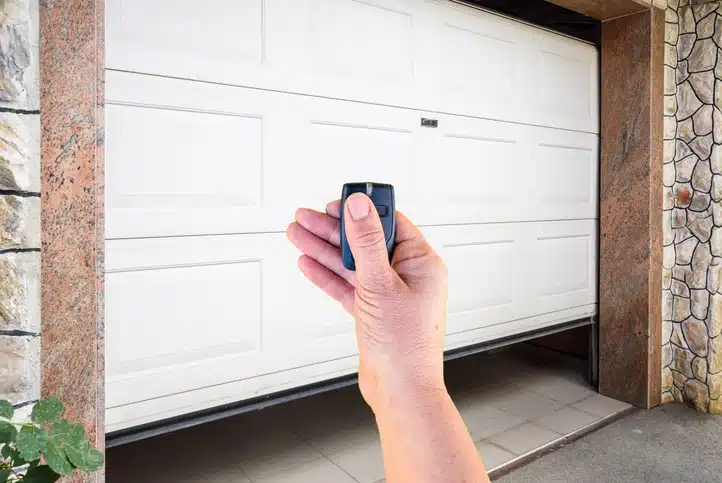
Keyless entry pads also deserve more credit than they get. They are one of the simplest and most useful accessories available. If you walk the dog, go for a bike ride, or have kids coming and going without keys, a keypad is hard to beat. A good model should have weather-resistant buttons, backlighting, and easy code management. If you rent out part of your property, host guests, or work with service providers, temporary codes are especially handy.
Weather sealing is less exciting and more important
If I had to pick one upgrade homeowners underestimate most, it would be weather sealing. Bottom seals, perimeter seals, threshold seals, and retainer systems rarely get attention until someone notices dirt, drafts, water, or insects.
Parker’s climate makes this more important than many people assume. A garage does not need to be fully conditioned for weather sealing to matter. Dry air, wind-driven dust, cold snaps, and occasional snow or rain can all exploit gaps around the door. Once seals wear out, the garage becomes harder to keep clean, and anything stored near the opening starts paying the price.
A fresh bottom seal can make an immediate difference, especially if the old one has gone brittle, flattened out, or pulled away at the corners. Side and top seals help reduce airflow and debris infiltration. Threshold seals can be useful where the slab slope allows water to drift toward the door, though they are not right for every garage. If the floor is already uneven or the gap under the door varies significantly from one side to the other, you need to assess the fit carefully. A threshold that works beautifully in one garage can become a trip point or a nuisance in another.
Insulated doors also benefit from proper sealing more than people realize. Homeowners sometimes focus on door insulation value and ignore the fact that air leaks around the perimeter can undermine the whole setup. A well-insulated door with failing seals performs like a jacket left open in winter.
Better rollers can transform how the door feels
Ask any technician what changes the feel of a garage door quickly, and rollers will come up early. Standard rollers do the job, but upgraded nylon rollers with sealed bearings usually make a noticeable difference in both noise and smoothness. If your current door rattles through its travel, especially in an attached garage where sound carries into living spaces, better rollers are one of the most satisfying upgrades you can make.
I have seen homeowners assume they need a whole new opener because the system sounds rough and tired. In plenty of cases, the opener is not the primary problem. Worn rollers, dry hinges, misaligned track sections, and aging vibration points create a lot of noise. Fixing those details can make the opener seem newer than it is.
Roller upgrades also help reduce wear on other components by improving how the door travels through the track. That does not mean they are a cure-all. If the track is bent, the springs are unbalanced, or the opener force settings are wrong, rollers alone will not solve the issue. But as part of a general tune-up, they are one of the best-value accessories around.
The same goes for vibration isolation parts and noise reduction kits. In homes with bedrooms above or next to the garage, those accessories can be worth every dollar. A quieter close late at night or a gentler startup early in the morning is not glamorous, but families notice it immediately.
Lighting upgrades change the space more than the door
Some of the best garage door accessories are not attached to the door at all. Lighting is a good example. A dark garage feels smaller, messier, and less safe than it really is. Brighter, better-placed light makes every task easier, from backing in the car to finding tools to checking whether the door is closing properly.
Modern LED light panels and opener-integrated lighting kits have gotten much better. Good garage lighting should reduce shadows around the perimeter, not just blast light straight down the center. Motion-activated fixtures are especially useful if you enter through the garage carrying groceries, sports gear, or a sleeping child.
This matters for safety too. Poor lighting can hide worn cables, frayed weather stripping, clutter near the track, or objects stored where they should not be. It is easier to spot problems early in a Garage Door Accessories Parker well-lit garage. For detached garages, exterior lighting near the door and keypad is just as important. A simple dusk-to-dawn fixture or motion light near the opening can make nighttime access feel far more secure.
Battery backup is one of those upgrades you appreciate when you need it
Power outages are not constant, but they happen often enough that battery backup deserves real consideration, especially for households that use the garage as the primary entrance. When the power drops, a battery backup keeps the opener functional for multiple cycles, depending on the system and battery condition.
For some homeowners, this is just a convenience. For others, it is essential. If you store medical equipment, need dependable access for mobility reasons, or simply do not want to wrestle with a manual release during bad weather, battery backup is a sensible addition.
There is a practical side note here. A battery backup system is only as helpful as its maintenance. Batteries age out. Homeowners forget they are there until the outage arrives, then learn the battery stopped holding charge two years ago. If you install one, treat it like any other backup component in the house. Test it. Replace it on schedule. Keep expectations realistic.
Reinforcement and hardware upgrades for heavier use
Not every garage sees the same kind of use. Some doors cycle a few times per day. Others go up and down constantly because the garage is the family’s true front door. If your door gets heavy use, reinforcement hardware becomes more valuable.
Top brackets, opener reinforcement struts, upgraded hinges, and stronger mounting points help distribute stress better over time. This is especially useful on larger doors, insulated steel doors, and setups where the opener is working harder because of the door size or frequency of Garage Door Accessories Parker use.
In areas where wind loads matter, reinforcement can also improve resilience. I am careful here because not every accessory qualifies a door for specific wind ratings. That depends on the whole system, not just a single add-on. But targeted reinforcement can still improve structural stability and reduce flex.
This is also where professional judgment matters. More hardware is not automatically better. Over-reinforcing the wrong area, mixing incompatible parts, or using generic components on a system with specific requirements can create new problems. If the door is already showing stress fractures near the top section or the opener attachment point, that deserves proper evaluation rather than a guess-and-go fix.
The accessories I recommend most often
When people want a short list of upgrades that tend to deliver real value, I usually start here:
- Keyless entry keypad for everyday convenience and controlled access.
- Quality weather seals to reduce drafts, dust, moisture, and pests.
- Nylon rollers with sealed bearings for quieter, smoother operation.
- Smart control or Wi-Fi access if remote monitoring suits your routine.
- Battery backup if the garage is your main entry or outages are a concern.
That list is not universal, but it covers the accessories that solve the widest range of common complaints.
Storage accessories that respect the door system
Garage organization often gets folded into the same conversation as door accessories, and for good reason. The door system needs space to move safely. Good storage helps preserve that space. Bad storage crowds the tracks, blocks sensors, and creates hazards around the opening.
Wall-mounted tool systems, overhead racks positioned away from door travel, and corner shelving can all improve the function of the garage without interfering with the door. The key is respecting clearance. I have seen homeowners install overhead storage that looked tidy at first but left just enough encroachment to catch on the opener rail, limit service access, or tempt people to stack items too close to the moving door.
A better approach is to plan around the door first, then organize the remaining footprint. If you use the garage for bikes, skis, yard equipment, or bins of seasonal decor, dedicate zones that keep those items away from springs, tracks, and photo-eye sensors. This sounds obvious, but garages drift into clutter slowly. Accessories that support organization can protect the door system just as much as they protect your patience.
Safety sensors and visibility aids deserve attention
A garage door is the largest moving object in most homes. That makes safety accessories worth discussing, even if they are not exciting purchases. Photo-eye sensors, if properly aligned and kept clean, are the front line. If yours are unreliable, flickering, or mounted where they get knocked out of position, address that early.
For households with children, pets, or frequent foot traffic through the garage, visibility aids help too. Small items like laser parking guides, parking stops, and extra warning lights may sound minor, but they reduce daily mistakes. A parking guide can keep a vehicle from creeping too far forward into storage shelves or too far back toward the door’s path. A visible closing warning light on the opener can be useful in active family garages where someone is often nearby.
The trade-off is that these accessories should simplify, not clutter. A garage overloaded with gadgets often becomes visually noisy, which can be counterproductive. I prefer a few well-chosen safety aids over a pile of novelty add-ons.
Choosing accessories for Parker homes specifically
The phrase Garage Door Accessories Parker covers a wide range of homes and use cases. A newer subdivision garage attached to a two-story house has different needs than an older detached garage used mainly for storage. Still, some patterns come up often in this area.
First, dust management matters more than many people expect. Good seals and a reasonably tight envelope reduce cleanup and help protect stored belongings. Second, quiet operation matters in attached homes, especially where bedrooms sit above the garage. Third, convenience upgrades tend to get heavy use because garages are frequently the main household entrance. That is why keypads, smart controls, and reliable lighting tend to be smart investments here.
I also pay attention to sun exposure. South- and west-facing garage doors can take a beating from heat and UV over time, which affects seal life, keypad surfaces, and some lower-end plastic accessories. Spending a bit more for better materials usually pays off in longevity.
A few mistakes to avoid before you buy
Homeowners can waste money on accessories that either do not fit their setup or do not solve the actual issue. These are the mistakes I see most often:
- Buying universal parts without checking opener or door compatibility.
- Replacing noisy components piecemeal when the system really needs a tune-up.
- Installing storage or lighting that interferes with track clearance or service access.
- Choosing the cheapest weather seal material, then replacing it again a year later.
- Assuming a smart accessory will work well without solid Wi-Fi coverage in the garage.
Those problems are avoidable with a little planning. Before ordering accessories, identify the exact door and opener model if possible. Measure clearances. Look at where cables, tracks, and the opener rail actually travel. If the goal is quieter operation, do not just buy one part and hope. Noise usually comes from a combination of wear points.
When a pro should step in
Some accessories are homeowner-friendly. Keypads, parking aids, and certain lighting products are usually straightforward. Others sit closer to the line where experience matters. Rollers, reinforcement hardware, opener settings, and anything near springs or cables deserve caution. Torsion spring systems store serious energy. That is not a place for improvisation.
A professional can also help you avoid mismatched upgrades. I have seen doors with great new accessories installed on top of neglected mechanics, which is like putting new tires on a car with bad alignment. The parts may be fine, but the underlying system still needs proper adjustment.
That does not mean every upgrade requires a service call. It means good judgment matters. If you are already noticing jerky movement, sagging sections, delayed response, or grinding noises, solve those conditions first. Accessories work best on a healthy foundation.
The best upgrades are the ones you notice every day
Home improvement decisions often get framed around resale value, but garage door accessories tend to shine in daily living. You notice the keypad when your hands are full. You notice quiet rollers at dawn. You notice tighter seals after a storm. You notice better lighting every time you step into the garage at night.
That is why the best Garage Door Accessories Parker homeowners choose are usually the practical ones. They reduce friction. They support the way the household really functions. They make the garage cleaner, safer, quieter, and more dependable without turning it into a science project.
If you are deciding where to start, think less about trends and more about your most repeated annoyances. The garage door that wakes the house, the dust that keeps coming back, the weak lighting, the lack of backup access, the daily dance with keys, those are the places where smart accessories earn their keep. Over time, those small improvements add up to a garage that feels far more finished and far easier to live with.
Select Garage Doors
11479 Pine Dr
Parker, CO 80134, United States
Phone: (303) 228-0018
FAQ About Garage Door Accessories Parker
Where can I find garage door accessories?
Garage door accessories are available from garage door service companies, authorized dealers, home improvement stores, and specialist suppliers. Select Garage Doors supplies and installs accessories for homeowners in Parker, including compatible remotes, wireless keypads, weather seals, and smart controls. Check your opener model and door specifications before choosing a replacement or upgrade.
How to make a garage door more attractive?
Cleaning the door, refreshing a manufacturer-approved finish, and choosing coordinated decorative handles or hinge accents can improve its appearance. Compatible window inserts may also change the look of an existing window section. Match accessories to the door material and style, and make sure added hardware does not interfere with movement, seals, or safety equipment.
Where can I buy garage door inserts?
Decorative window inserts can be sourced through the door manufacturer, an authorized garage door dealer, or a supplier that carries parts for your specific door series. Match the model, window frame dimensions, and attachment system; inserts are not universally interchangeable. Ask a professional to confirm compatibility before ordering, especially if the work involves glass or changes to a door section.